
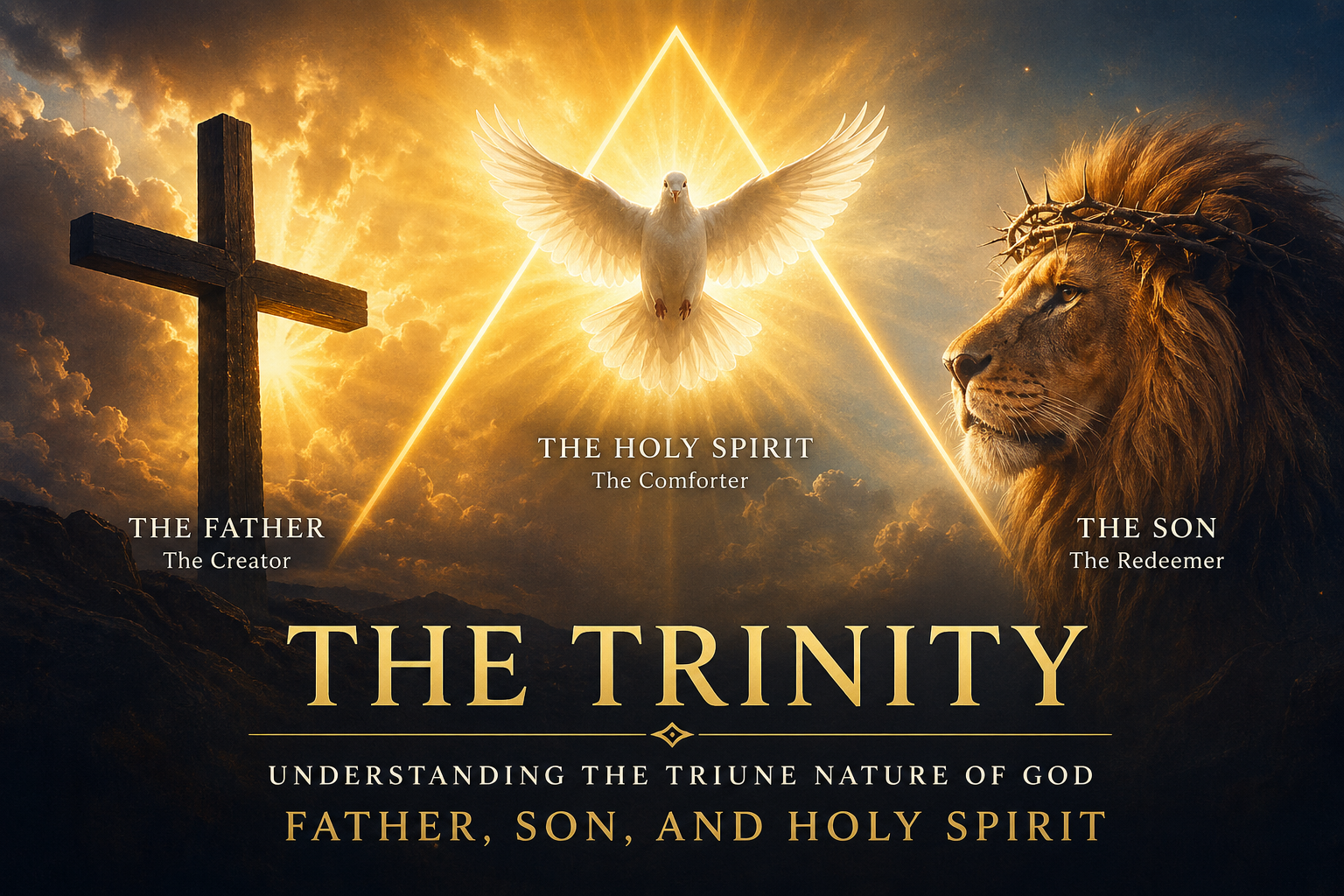
Introduction: The Greatest Mystery of the Christian Faith
There is perhaps no doctrine more central to Christianity and none more frequently misunderstood than the Trinity. Ask most people to explain it, and you will likely receive a puzzled look, a nervous laugh, or a well-meaning but tangled answer. And honestly? That is completely understandable. The Trinity is not a simple idea. It is the deepest truth about who God is.
But here is the beautiful thing: the Trinity is not meant to be a confusing riddle that pushes you away from God. It is meant to be a glorious revelation that draws you closer to Him. When you begin to grasp even partially what it means that God is Father, Son, and Holy Spirit, your faith does not shrink. It expands.
This article walks you through what the Trinity is, where it comes from in Scripture, what it is not, and why it matters profoundly for your everyday life as a believer.
What Is the Trinity? A Clear Definition
The doctrine of the Trinity teaches that there is one God who exists eternally as three distinct Persons: The Father, the Son (Jesus Christ), and the Holy Spirit. These three Persons are coequal, coeternal, and consubstantial, meaning they share the same divine nature and essence, yet they are genuinely distinct from one another.
In theological language, Christians affirm:
There is only one God (monotheism, not three gods)
God exists as three Persons (not three separate beings, but three distinct Persons within one Being)
Each Person is fully God (the Father is fully God, the Son is fully God, the Holy Spirit is fully God)
The word “Trinity” itself does not appear in the Bible. It comes from the Latin trinitas, meaning “Threeness.” The early church theologian Tertullian is widely credited with first using this term in the late second century. However, the concept of the Trinity is thoroughly woven throughout the pages of Scripture, from Genesis to Revelation.
The Biblical Foundation of the Trinity
One of the most common challenges people raise about the Trinity is this: “If it’s so important, why isn’t the word in the Bible?” This is a fair question, and the answer reveals something important about how we read Scripture.
Many essential Christian concepts are not named explicitly in the Bible but are clearly taught throughout it. The concept of the Trinity is present on virtually every page of the New Testament, and its roots reach all the way back into the Old Testament.
In the Old Testament
The very first verse of the Bible introduces plurality within God. Genesis 1:1 says, “In the beginning, God created the heavens and the earth.” The Hebrew word for God here is Elohim a plural noun that takes a singular verb. This grammatical pattern runs throughout the Hebrew Scriptures and has intrigued scholars for centuries.
Later, in Genesis 1:26, God says, “Let us make mankind in our image, in our likeness.” Who is God speaking to? The “us” and “our” language implies a plurality within the divine being that the New Testament later clarifies.
Isaiah 48:16 offers another remarkable glimpse: “Come near me and listen to this: From the beginning I have not spoken in secret; from the time it happened, I was there. And now the Sovereign Lord has sent me, with his Spirit.” In this single verse, we find three distinct figures: the Sender, the Sent One, and the Spirit.
In the New Testament
The New Testament brings the Trinity into full, unmistakable clarity.
At the baptism of Jesus (Matthew 3:16–17), all three Persons of the Trinity appear simultaneously: Jesus is baptized in the water, the Spirit descends like a dove, and the Father speaks from heaven, “This is my Son, whom I love; with him I am well pleased.” Three distinct Persons. One divine moment.
The Great Commission in Matthew 28:19 is equally striking. Jesus commands His disciples to baptise “in the name [singular] of the Father and of the Son and of the Holy Spirit.” Notice: not three names but one name shared by three Persons.
The Apostolic blessing in 2 Corinthians 13:14 reads: “May the grace of the Lord Jesus Christ, and the love of God, and the fellowship of the Holy Spirit be with you all.” Paul here treats all three Persons as distinct sources of divine blessing, a thoroughly Trinitarian statement woven naturally into his closing words.
The opening of the Gospel of John is theologically explosive: “In the beginning was the Word, and the Word was with God, and the Word was God” (John 1:1). The Word (Jesus) was simultaneously with God (distinct) and was God (identical in nature). This verse alone contains the heart of Trinitarian theology.
Common Misunderstandings About the Trinity
Because the Trinity is complex, many well-meaning people have stumbled into error trying to explain it. Knowing what the Trinity is not is just as important as knowing what it is.
1. The Trinity is NOT three separate Gods (Tritheism)
This is perhaps the most common misconception. Christianity is firmly monotheistic. The Father, Son, and Holy Spirit are not three independent divine beings who happen to work together. They are one God — one in essence, will, and purpose.
2. The Trinity is NOT one God wearing three masks (Modalism)
Some teach that God is one Person who reveals Himself in three different modes or roles at different times — sometimes as Father, sometimes as Son, sometimes as Spirit. This view, known as modalism or Oneness theology, was declared heretical by the early church. The Persons of the Trinity exist simultaneously and relate to one another. The Father did not become the Son. The Son prays to the Father you cannot pray to yourself.
3. The Trinity is NOT a hierarchy where some are lesser gods (Arianism)
Some teach that God is one Person who reveals Himself in three different modes or roles at different times — sometimes as Father, sometimes as Son, sometimes as Spirit. This view, known as modalism or Oneness theology, was declared heretical by the early church. The Persons of the Trinity exist simultaneously and relate to one another. The Father did not become the Son. The Son prays to the Father you cannot pray to yourself.
Why the Trinity Matters for Your Daily Life
You may be thinking: This is all very theological, but what does it actually mean for Monday morning? More than you might expect.
1. You Worship a God Who Is Love — Eternally
Before creation ever existed, before there was a universe or a single human being, God was love. Not potentially loving. Not becoming loving. Already and always love because love requires a relationship, and within the Trinity, perfect love has existed between Father, Son, and Holy Spirit from eternity. When 1 John 4:8 says “God is love,” the Trinity is the reason that statement makes sense.
2. You Are Not Alone — The Holy Spirit Indwells You
Because God is three Persons, one of those Persons, the Holy Spirit, can dwell within every believer simultaneously. Jesus promised in John 14:16–17, “I will ask the Father, and he will give you another advocate to help you and be with you forever the Spirit of truth.” You carry the presence of God with you wherever you go. That is a Trinitarian privilege.
3. Your Salvation Is a Trinitarian Accomplishment
Think about what it took to save you. The Father chose you and sent His Son (Ephesians 1:4–5). The Son came to earth, lived perfectly, died sacrificially, and rose victoriously on your behalf (Romans 5:8). The Holy Spirit drew you to faith, convicted you of sin, and now lives within you, transforming you from the inside out (Titus 3:5). Your salvation is not a solo act. It is a cooperative, Trinitarian rescue mission planned in eternity and executed in history.
4. Your Prayers Reach God
When you pray, you pray to the Father, through the Son, in the power of the Spirit. Ephesians 2:18 captures this beautifully: “Through him [Christ] we both have access to the Father by one Spirit.” The Trinity is not an abstract doctrine it is the relational pathway by which a finite human being gets to speak directly to the infinite God of the universe.
Embracing the Mystery with Humility
One of the most freeing things a believer can do is to accept that the Trinity will never be fully comprehended by any human mind and to be at peace with that. God is greater than our categories, wider than our language, and deeper than our theology.
Over the centuries, theologians have used illustrations to help people grasp the Trinity: the three forms of water (ice, liquid, steam), the three parts of an egg, the three leaves of a shamrock. Each illustration captures a fragment of the truth but ultimately falls short. God is not like anything else. He is the original. All comparisons will eventually break down.
And yet, this God so beyond our comprehension chose to reveal Himself. He stepped into history as the Son. He breathes life into believers as the Spirit. He holds all things together as the Father. The Trinity is not a barrier to knowing God. It is the very shape of His self-revelation.
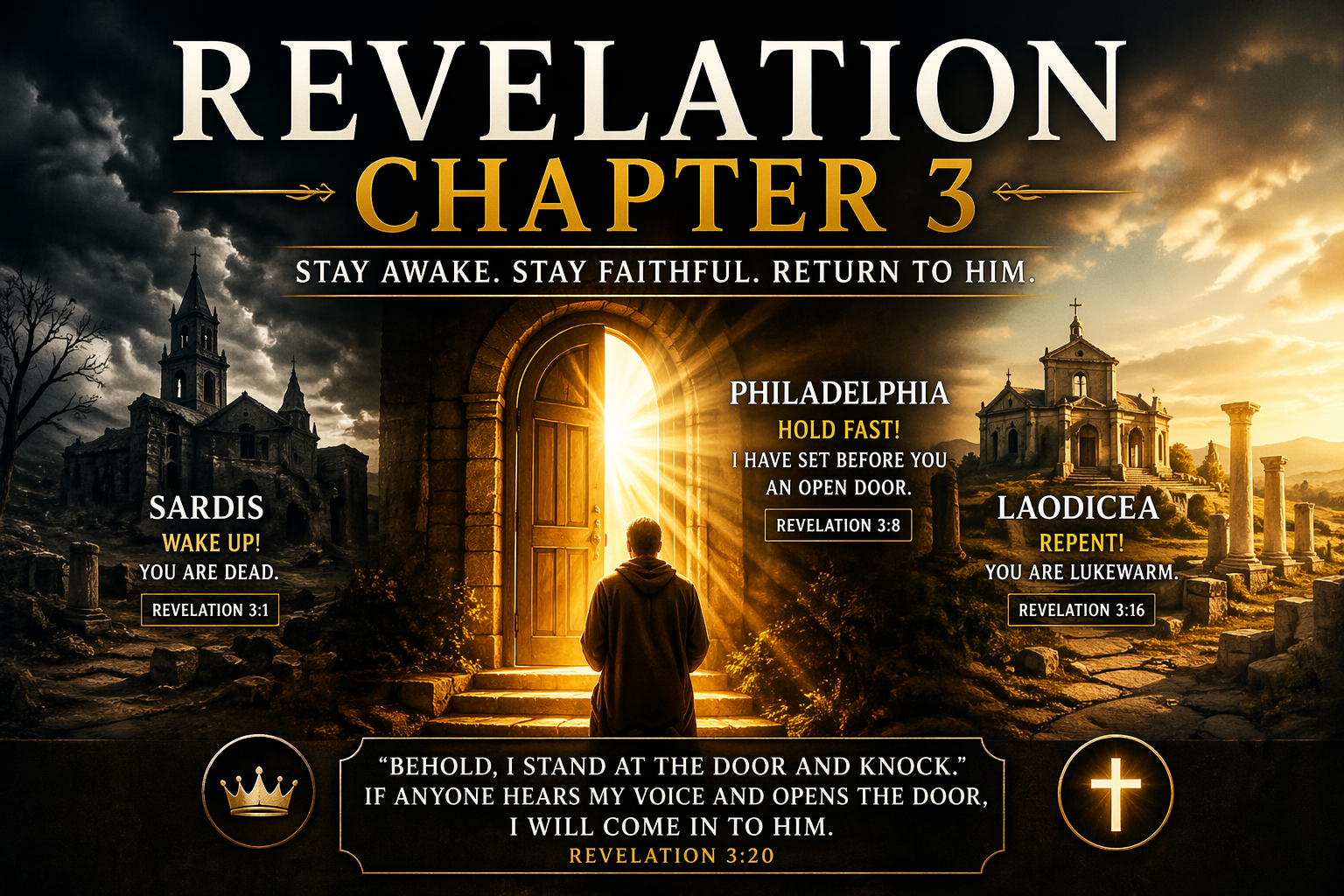
Conclusion: One God, Three Persons, Infinite Love
The Trinity is the heartbeat of the Christian faith. Remove it, and you remove the foundation of the gospel, the basis for salvation, the ground of worship, and the fuel for prayer. Understand it even imperfectly, and everything about your relationship with God becomes richer, deeper, and more wonder-filled.
The God you worship is not a solitary, isolated deity. He is a communion of love, Father, Son, and Holy Spirit who, out of that overflowing love, created you, redeemed you, and invites you into a relationship with Himself.
That is not a doctrine to be debated at a distance. That is a truth to be lived, celebrated, and proclaimed with joy.
One God. Three Persons. Eternal love. That is the Trinity.
FAQ
FAQ 1: What Exactly Is the Trinity?
Q: What does the doctrine of the Trinity actually mean?
The Trinity is the biblical teaching that there is one God who exists eternally as three distinct Persons — the Father, the Son (Jesus Christ), and the Holy Spirit. Each Person is fully God, yet there is not three gods but one. They are equal in nature, united in purpose, and distinct in Person. It is the deepest truth about who God is.
FAQ 2: Is the Trinity Actually Found in the Bible?
Q: If the word “Trinity” isn’t in the Bible, how do we know it’s a biblical doctrine?
The word “Trinity” does not appear in Scripture, but the truth it describes is found throughout it. At Jesus’ baptism, all three Persons appear simultaneously — the Son in the water, the Spirit descending, and the Father speaking from heaven (Matthew 3:16–17). The Great Commission commands baptism in the single name of Father, Son, and Holy Spirit (Matthew 28:19). The word is absent; the reality is everywhere.
FAQ 3: Was the Trinity Invented at the Council of Nicaea in AD 325?
Q: Did the Emperor Constantine create the Trinity doctrine at Nicaea for political reasons?
No history clearly contradicts this claim. Ignatius of Antioch affirmed the full divinity of Christ as early as AD 107, and Tertullian used the word trinitas around AD 200 over a century before Nicaea. The council did not invent the Trinity; it defended it against the heresy of Arianism, which falsely taught that Jesus was a created being. Nicaea protected what the church had always believed.
FAQ 4: Did Jesus Actually Claim to Be God?
Q: Did Jesus ever directly claim to be God, or is that something the church added later?
Jesus claimed divinity openly and repeatedly. In John 8:58, He declared “Before Abraham was born, I am” using God’s own divine name from Exodus 3:14, and the crowd immediately took up stones to kill Him for blasphemy. In John 10:30, He said, “the Father and I are one,” and His accusers stated plainly that He was claiming to be God. He never corrected them — because the claim was true.
FAQ 5: Is the Holy Spirit a Person or Just a Force?
Q: Is the Holy Spirit actually a Person, or is He simply God’s power at work in the world?
The Holy Spirit is fully a Person, not an impersonal force or divine energy. Scripture shows He has a mind (1 Corinthians 2:10), a will (1 Corinthians 12:11), and emotions; He can be grieved (Ephesians 4:30). In Acts 5:3–4, Peter directly identifies Him as both a Person you can lie to and as God Himself. You cannot grieve a force, only a Person.
© 2025. All rights reserved. Original content created for ministry and congregational use. Reproduction without prior written permission is strictly prohibited.